
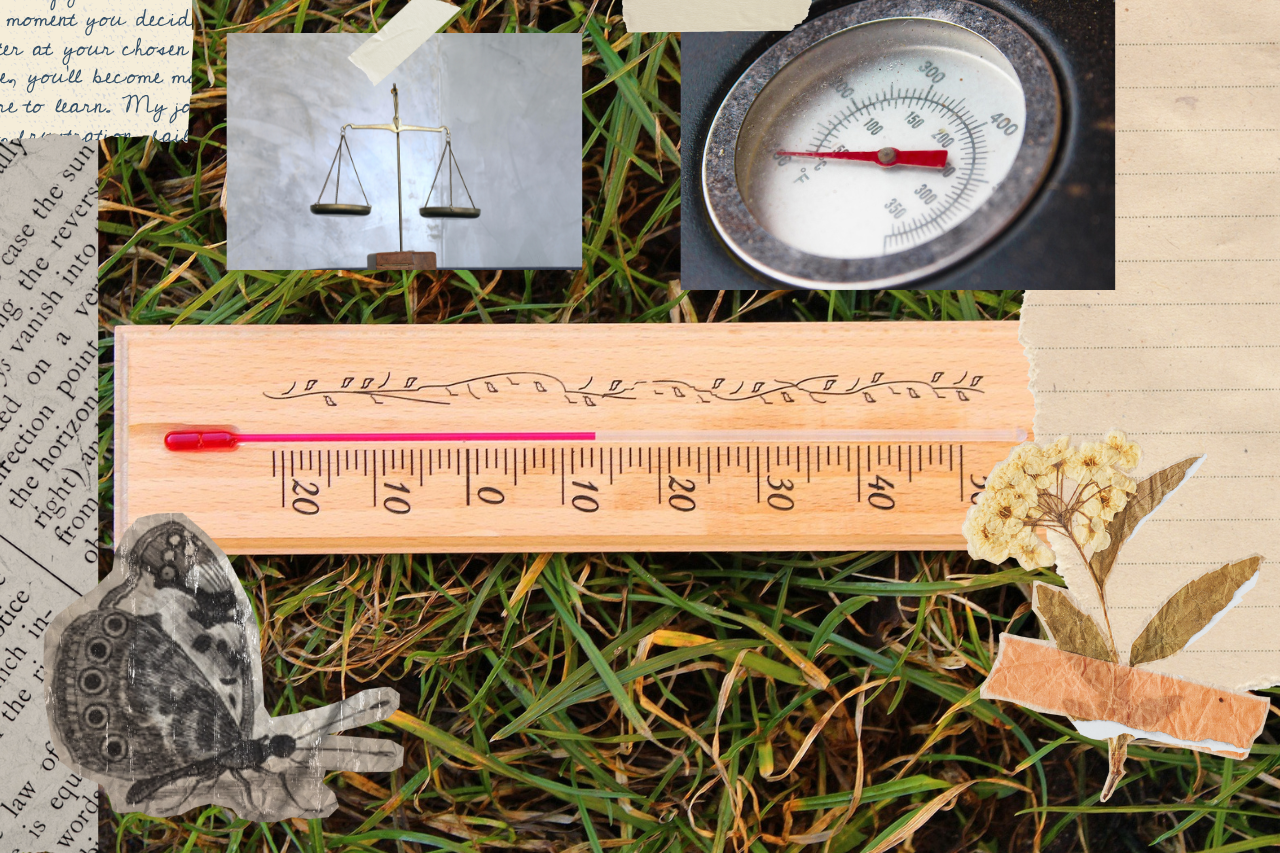
Learning means realizing that sometimes we see our lives from an angle that doesn’t allow us to truly live them. For a long time, I watched reality from the outside, like a spectator who couldn’t fully engage with what was happening. Eventually, I understood that I needed to change the way I looked at things—even if I didn’t know how to begin.
I chose to start this reflection here because this is the moment when I became aware of the limited perspective through which I had been viewing my life, piling up frustrations and disappointments. I’m sharing this story because it reflects exactly how I feel now: aware of the parallax error I repeated for so long, and finally ready to face it.
Reaching this clarity didn’t happen by chance. For years, I struggled with anxiety and depression, unresolved trauma, and a constant sense of not being enough. These experiences kept me locked in a narrow, limiting view of myself and the world. It was only about a year ago, when I began therapy with someone who truly understood me—and when I started prioritizing my mental health—that I was able to explore and challenge those deeply rooted beliefs. Therapy helped me identify harmful thought patterns, gave me tools to prevent emotional breakdowns, and allowed me to live more anchored in the present.
Before that—and for far too long—anxiety, depression, and trauma clouded my ability to see other perspectives. I was stuck in a single, rigid view where everything seemed either doomed or unreachable. It was a deep sense of helplessness: my unregulated emotions ran the show, dragging me wherever they pleased, whenever they pleased.
Living with complex PTSD, depression, and anxiety felt like being in a body on constant high alert, while my soul had shut down. I was always bracing for something terrible, even if nothing was actually happening, while an inner voice repeated over and over: “It’s your fault. You’re not going to make it. You’re not enough.” My mind jumped from painful memories of the past to catastrophic fears about the future, leaving no room for the present. My heart raced, my breath was tight, my chest was tense. And all of it was coated in a thick, numbing sadness that made even the smallest efforts feel enormous.
Because of all this, I kept running after things I thought would save me—a new project, a form of recognition, a relationship, a move to a different city. I clung to each goal desperately, convinced that this time, things would finally be different. But every time I reached something, it lost its shine. It became dull, insufficient, as if having it stripped it of meaning. And so, moving from desire to desire, from achievement to achievement, I collected disappointments that only reinforced the feeling that I was broken, incapable of holding on to anything good.
Why do I call this a “parallax error”? Because ever since I learned that concept in high school, it stuck with me. A parallax error happens when we measure something from the wrong angle, distorting the result. And for far too long, that’s exactly what I did with my life: I measured it from an angle that didn’t allow me to experience it fully, accumulating frustration and dissatisfaction along the way.
Over time, I came to understand that life isn’t about reaching a specific destination, or chasing the next carrot on a string. Existence loses its meaning when we only pursue goals without knowing how to enjoy them once we’ve reached them. That’s the real parallax error: seeing from the outside, through a lens that blocks out the experience of actually living. For years, I felt like a faulty instrument—unable to measure my own happiness, obsessed with escaping a stormy present and idealizing a future that never arrived the way I hoped it would.
Now I know that my true “error” was observing my life instead of living it, letting my emotions drag me deeper and deeper into despair. Today, I have the tools to recognize and manage those emotions before they take over. I know I have a support network of people who genuinely want to see me well. And I know that it’s possible to come back from that disconnected state I lived in for so long.
Though I still need to make the conscious effort to redirect my thinking, today I choose to be present. To inhabit my life fully—with everything that entails. Because if I keep watching from a distance, too afraid to live it, I’d only be letting the parallax error keep ruling my perspective.
 Mel Bruja
Leave a comment